
Understanding Hyperpigmentation: What Causes Dark Spots and How to Achieve a More Even-Looking Skin Tone
Have you ever noticed that a pimple disappears, but the dark mark it leaves behind seems to stay for months? Or perhaps you’ve developed patches of uneven pigmentation after spending time in the sun.
Introduction
Have you ever noticed that a pimple disappears, but the dark mark it leaves behind seems to stay for months? Or perhaps you’ve developed patches of uneven pigmentation after spending time in the sun.
These changes are known as hyperpigmentation, one of the most common skin concerns affecting people of all skin types and tones. While hyperpigmentation is usually harmless, it can affect confidence and often requires patience and consistency to manage.
The good news is that understanding what causes pigmentation is the first step toward supporting a clearer, more even-looking complexion.
What Is Hyperpigmentation?
Hyperpigmentation occurs when certain areas of the skin produce more melanin than usual. Melanin is the natural pigment responsible for the color of your skin, hair, and eyes.
Normally, melanin helps protect the skin from environmental stress, particularly ultraviolet (UV) radiation. However, when melanin production becomes uneven, darker patches or spots can develop.
Hyperpigmentation can appear as:
-
Small dark spots
-
Larger patches of discoloration
-
Uneven skin tone
-
Areas of lingering pigmentation after inflammation
Although these concerns can be frustrating, they often develop gradually and may have multiple contributing factors.
What Causes Hyperpigmentation?
There isn’t a single cause of hyperpigmentation. Instead, it usually develops due to a combination of internal and environmental factors.
Sun Exposure
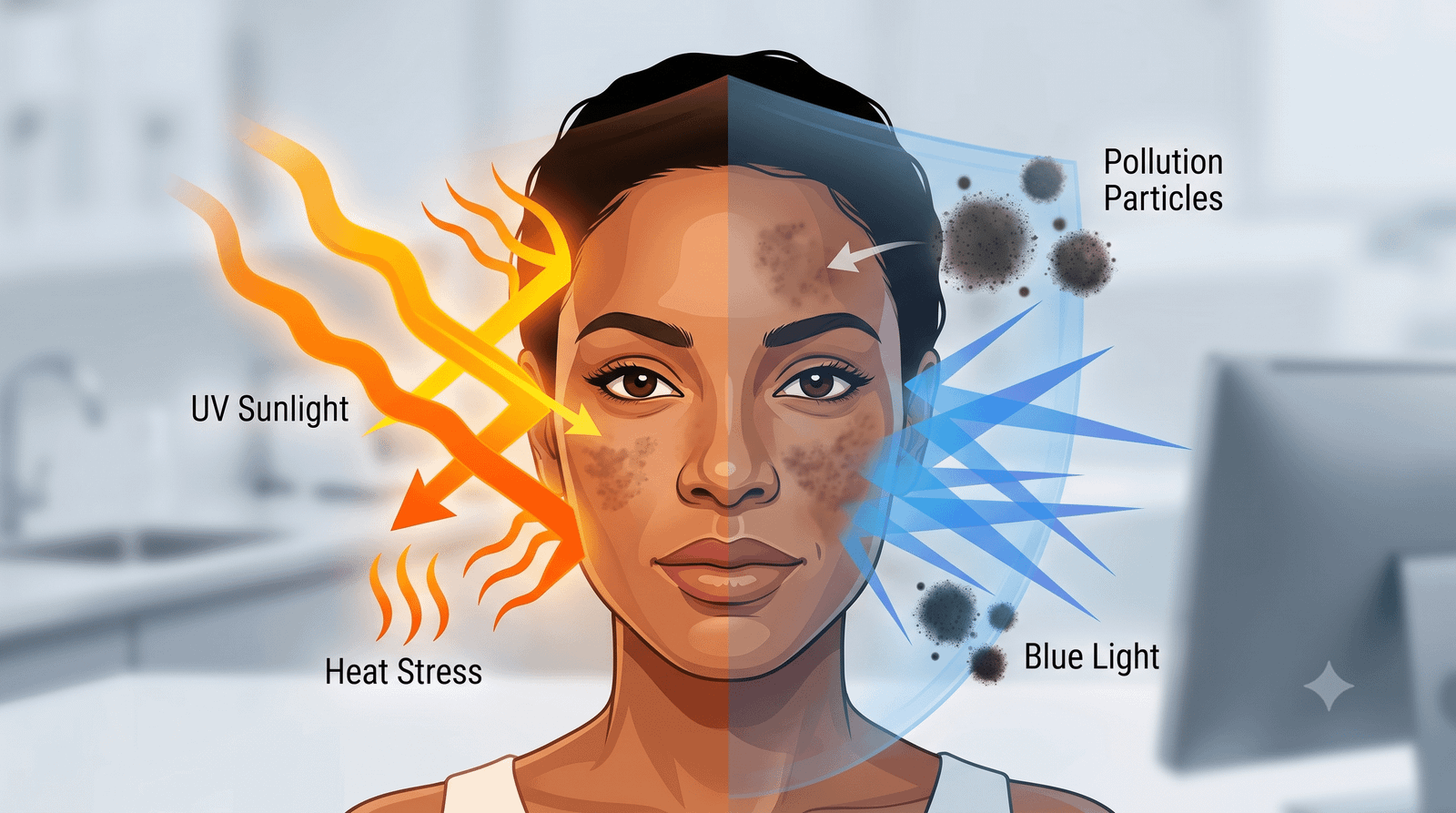
One of the most common triggers is repeated exposure to ultraviolet (UV) rays. Sunlight stimulates melanin production as part of the skin’s natural defense mechanism. Over time, this can contribute to sun spots and make existing pigmentation more noticeable.
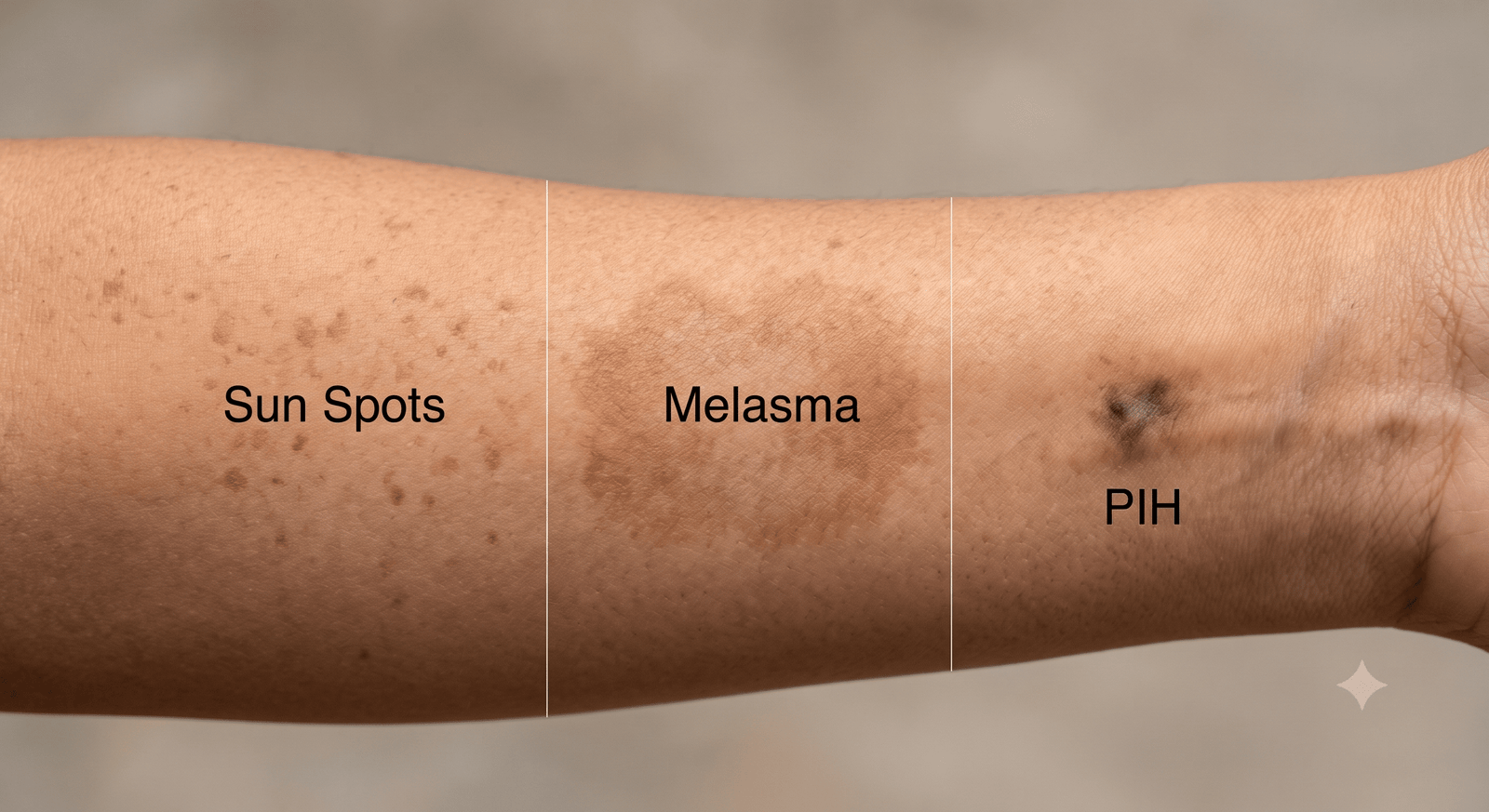
Post-Inflammatory Hyperpigmentation (PIH)
After acne, eczema, insect bites, or minor skin injuries heal, some people develop lingering dark marks known as post-inflammatory hyperpigmentation (PIH). These marks are especially common in individuals with medium to deeper skin tones.
Hormonal Changes
Hormonal fluctuations can also influence pigmentation. Melasma, for example, is often associated with pregnancy or hormonal changes and typically appears as symmetrical patches on the face.
Environmental Stress
Modern lifestyles expose our skin to more than just sunlight. Heat, pollution, and even visible blue light are increasingly recognized as environmental stressors that may influence skin appearance over time. While UV radiation remains the primary contributor to pigmentation, protecting the skin from multiple environmental factors has become an important part of modern skincare.
Common Types of Hyperpigmentation
Understanding the type of pigmentation you’re experiencing can help you choose an appropriate skincare approach.
Melasma
Melasma appears as larger patches of brown or gray-brown pigmentation, most commonly on the cheeks, forehead, nose, and upper lip. It is often influenced by hormones and sun exposure.
Post-Inflammatory Hyperpigmentation (PIH)
PIH develops after inflammation has healed. Acne marks are one of the most common examples, but PIH can also occur after cosmetic procedures or skin irritation.
Sun Spots
Also known as solar lentigines or age spots, these flat brown spots develop after years of cumulative sun exposure and are commonly seen on the face, hands, and shoulders.
Building Healthy Daily Habits for Brighter-Looking Skin
Supporting an even-looking complexion starts with consistency rather than quick fixes.
Some everyday habits that can help support healthy-looking skin include:
-
Applying a broad-spectrum sunscreen every day
-
Wearing protective clothing and seeking shade during peak sunlight hours
-
Avoiding picking or squeezing blemishes
-
Following a gentle skincare routine suited to your skin type
-
Eating a balanced diet rich in antioxidant-containing fruits and vegetables
-
Staying hydrated and getting enough sleep
These habits help create a strong foundation for long-term skin health and complement topical skincare products.
Looking Beyond Topical Skincare
When addressing hyperpigmentation, most people immediately think of brightening serums, vitamin C, retinoids, or professional treatments such as chemical peels and laser therapy. These can all play an important role, but they focus primarily on the skin’s surface.
Healthy-looking skin is also influenced by what’s happening beneath the surface.
Factors such as oxidative stress, environmental exposure, nutrition, and the body’s natural antioxidant defenses can all contribute to how the skin looks over time. That’s why many dermatologistsand skincare professionals now recommend an inside-out approach that combines topical care with healthy lifestyle habits and nutritional support.
This doesn’t replace your skincare routine—it complements it.
How Depigma GlocalCare Complements a Brightening Routine
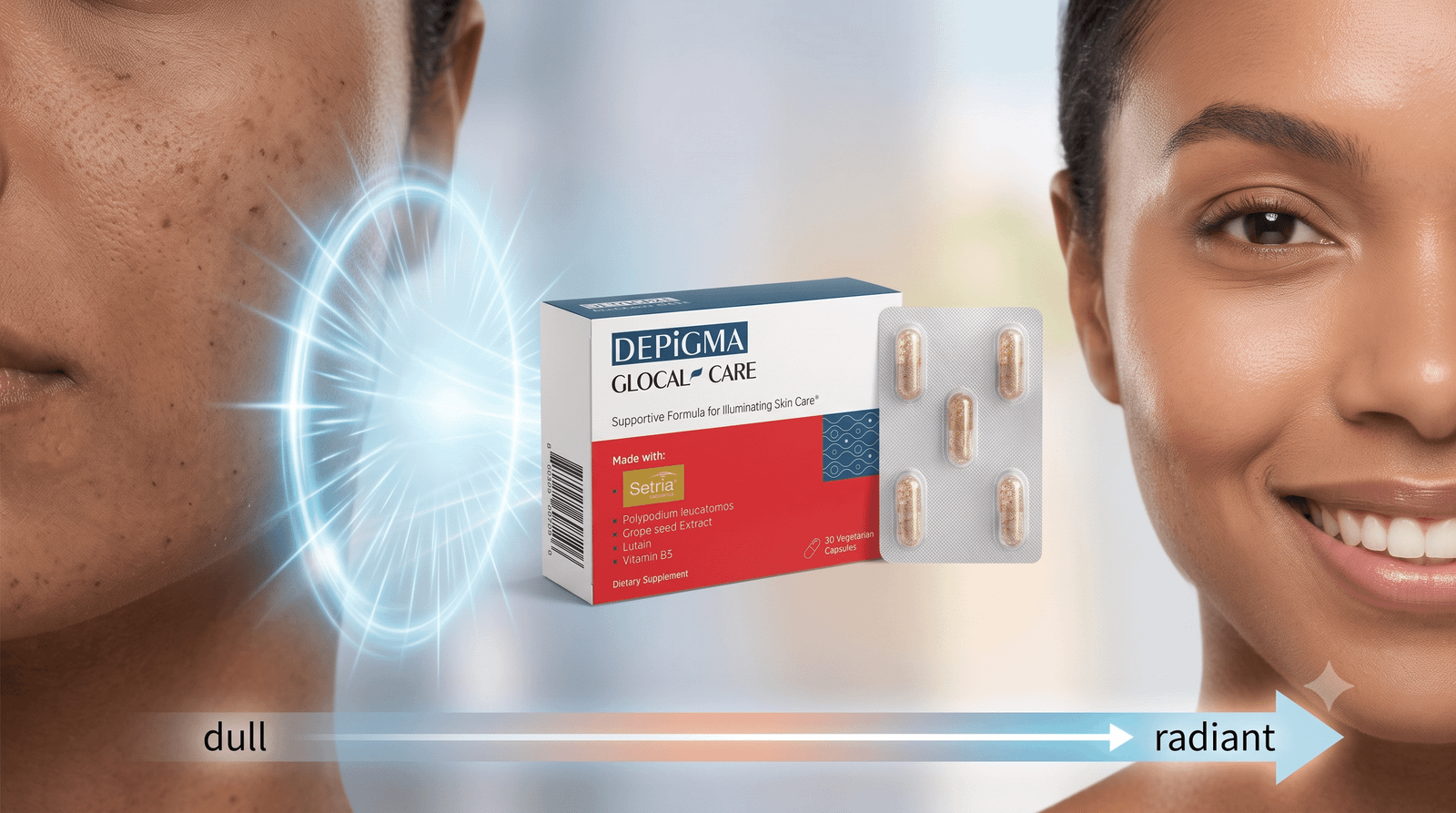
For people concerned about melasma, dark spots, post-inflammatory hyperpigmentation (PIH), or uneven skin tone, Depigma GlocalCare is designed to work from within as part of GlocalCare’s functional dermatology approach.
Rather than replacing topical skincare, Depigma is formulated to complement brightening creams, sunscreen, professional treatments, and aesthetic procedures by supporting the internal pathways involved in pigmentation balance, antioxidant defense, and overall skin radiance.
Its formula combines multiple antioxidant and pigmentation-support ingredients selected to help support a clearer, brighter, and more even-looking complexion while helping the skin manage environmental stress from UV exposure, heat, blue light, and pollution.
Key Ingredients and How They Support Your Skin
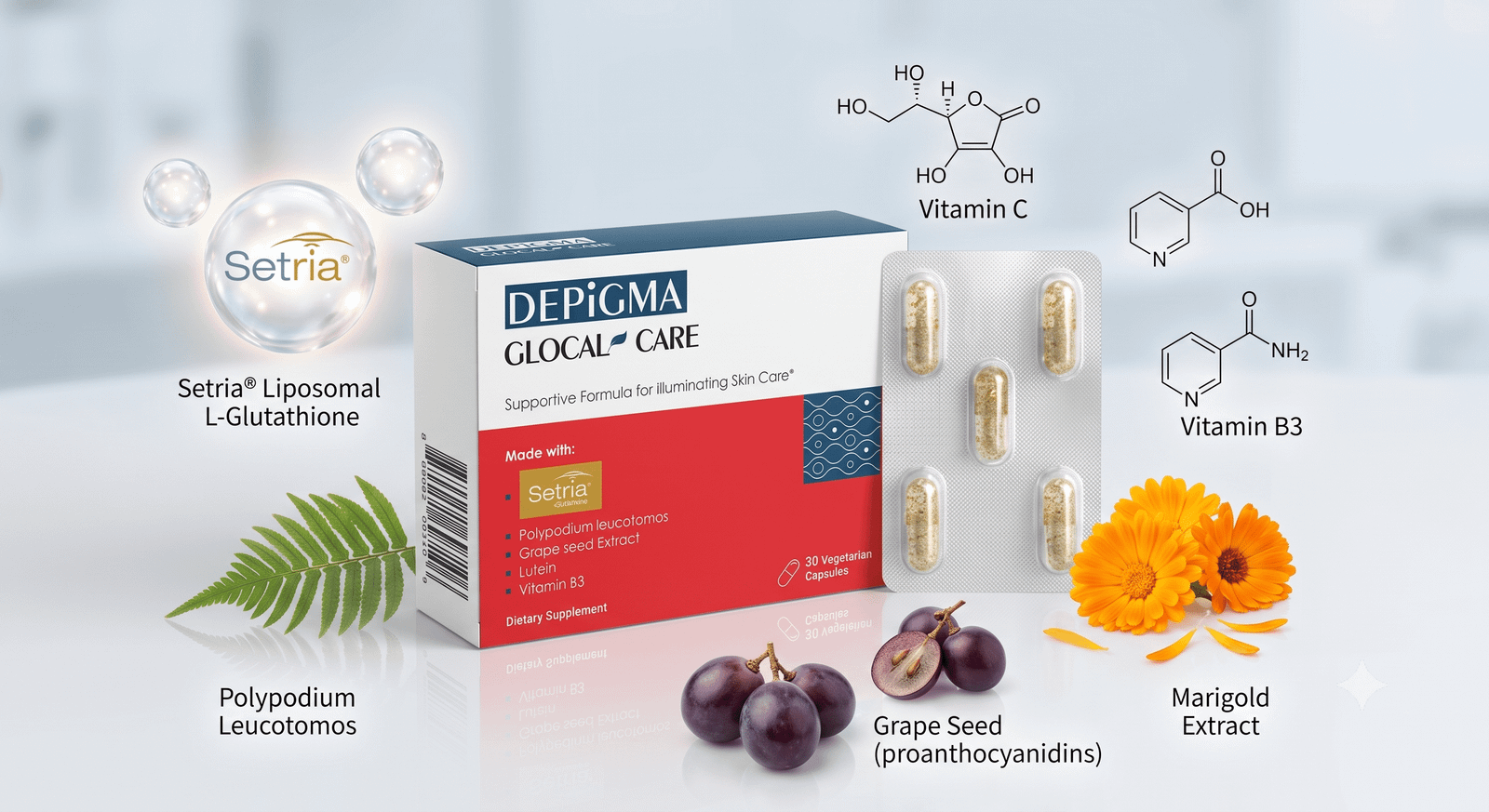
Setria® Liposomal L-Glutathione
Setria® Liposomal L-Glutathione is Depigma’s hero brightening ingredient.
It supports the body’s natural antioxidant defenses while helping promote a brighter, more even-looking complexion from within. Its liposomal delivery system is included to support enhanced absorption and performance.
Polypodium Leucotomos
This botanical extract helps support skin exposed to UV-related oxidative stress while supporting pigmentation balance associated with sun exposure.
It also complements daily sunscreen and topical brightening routines, making it a valuable addition to a comprehensive pigmentation-care plan.
Grape Seed Extract & Proanthocyanidins
These plant-derived antioxidants help defend against free radicals generated by pollution, UV exposure, and other environmental stressors.
They also support healthier-looking skin clarity, radiance, and overall complexion quality.
Marigold Extract & Lutein
Modern lifestyles expose our skin to both natural sunlight and digital devices.
Marigold Extract and Lutein help support skin exposed to light-related oxidative stress, contributing to a healthier-looking complexion while complementing the formula’s overall antioxidant network.
Vitamins C, E & B3
These well-known vitamins work together to support:
-
Antioxidant defense
-
Healthy skin barrier function
-
Collagen support
-
Skin radiance
-
A more even-looking complexion
Together, they complete Depigma’s comprehensive inside-out approach to skin wellness.
Who May Benefit from Depigma GlocalCare?
Depigma may be suitable for individuals who:
-
Are concerned about melasma or uneven skin tone
-
Have lingering dark spots after acne or inflammation
-
Experience pigmentation after sun exposure
-
Want to support brighter-looking skin from within
-
Use topical brightening products and want complementary internal support
-
Are following professional skincare protocols such as peels, lasers, or IPL under the guidance of a skincare professional
Depigma is intended to work alongside sunscreen, topical brightening products, and healthy skincare habits as part of a consistent pigmentation-support routine.
Final Thoughts
Hyperpigmentation is a complex skin concern influenced by factors such as sun exposure, inflammation, hormones, and environmental stress. While there isn’t a single solution that works for everyone, a consistent routine can help support a healthier, more even-looking complexion.
Daily sun protection, gentle skincare, healthy lifestyle habits, and an inside-out approach can all contribute to long-term skin wellness.
For individuals looking to complement their topical routine, Depigma GlocalCare provides internal nutritional support with a carefully selected blend of antioxidants and pigmentation-support ingredients. Designed to work alongside sunscreen, brightening skincare, and professional treatments, it supports pigmentation balance, antioxidant defense, and healthier-looking skin from within.
Ready to Support Brighter, More Even-Looking Skin?
If you’re looking for an inside-out approach to complement your daily skincare routine, Depigma GlocalCare is formulated to support pigmentation balance, antioxidant defense, and overall skin radiance.
👉 Explore Depigma GlocalCare
FDA Disclaimer: These statements have not been evaluated by the Food and Drug Administration. This product is not intended to diagnose, treat, cure, or prevent any disease.